published on .
It Begins with the Arcade
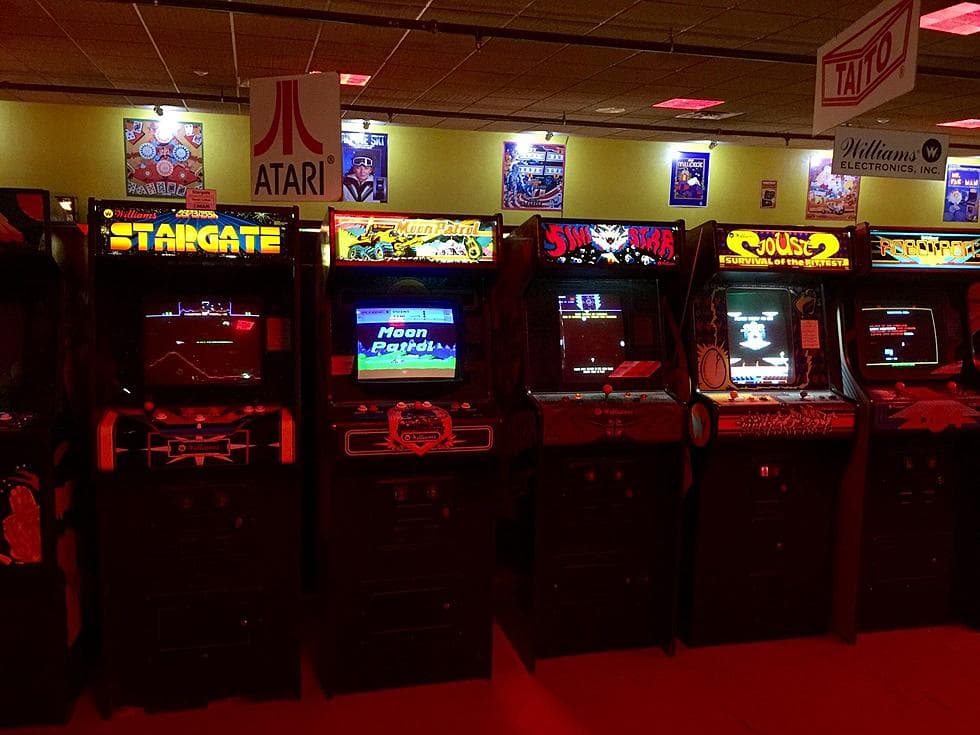
Once upon a time, the arcade dominated the video game marketplace. The business model was simple: fill a place with customers who would feed their quarters into your machines. Floor space was limited, and owners often had to lease or buy cabinets. By the time video arcade games arrived on the scene, pinball and other skill games had already established industry norms. Games were optimized around return on investment: both up-front cost and floor space usage. Naturally, games also had to be fun, but a fun game that was easy to beat on a single quarter was bad for business.
Image from Large Dave's arcade article .
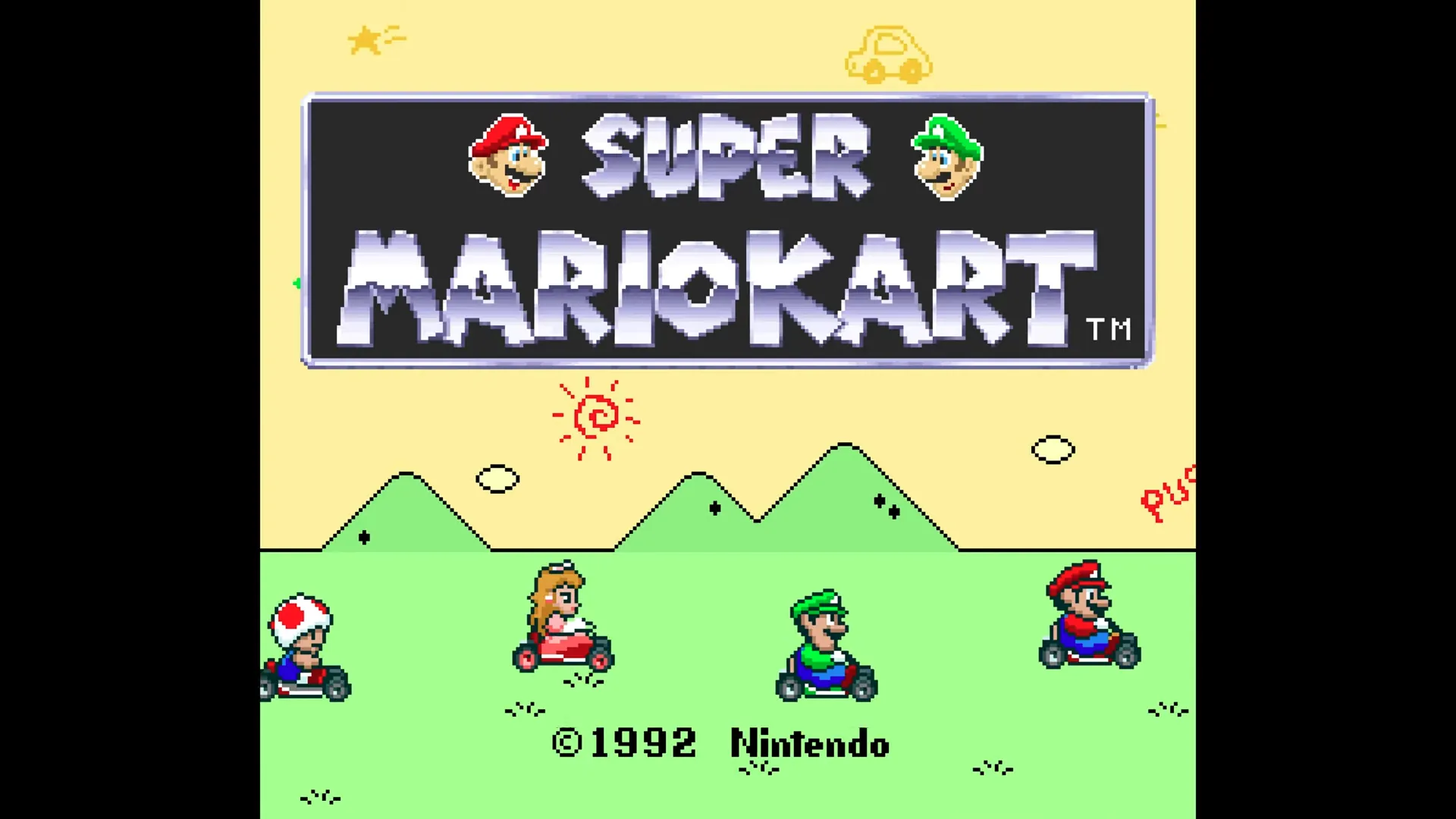
So how do you get a kid to shove his weekly allowance into your machine? You create a first level that hooks him, featuring engaging gameplay with a progressive difficulty curve. Build up his confidence, then he meets his first boss or a really challenging part of the level and wham! Insert another quarter before the countdown reaches zero.

Screenshot taken from AL82 Retrogaming Longplays Youtube Video .
As good as this sounds on paper, it quickly became apparent that certain machines would get labeled as quarter-eating monsters. To help counter this, manufacturers often included variables the arcade owner could toggle, such as how many lives a quarter would buy, how long the mission timer was, the number of enemies, and boss health.
Early Console Games Inherited Arcade Mechanics
When home consoles entered the market, many of the games were ports of arcade titles. As for console exclusives, many of them inherited design elements from their big brothers. This inheritance would linger long after coin-operated machines became a relic of the past.
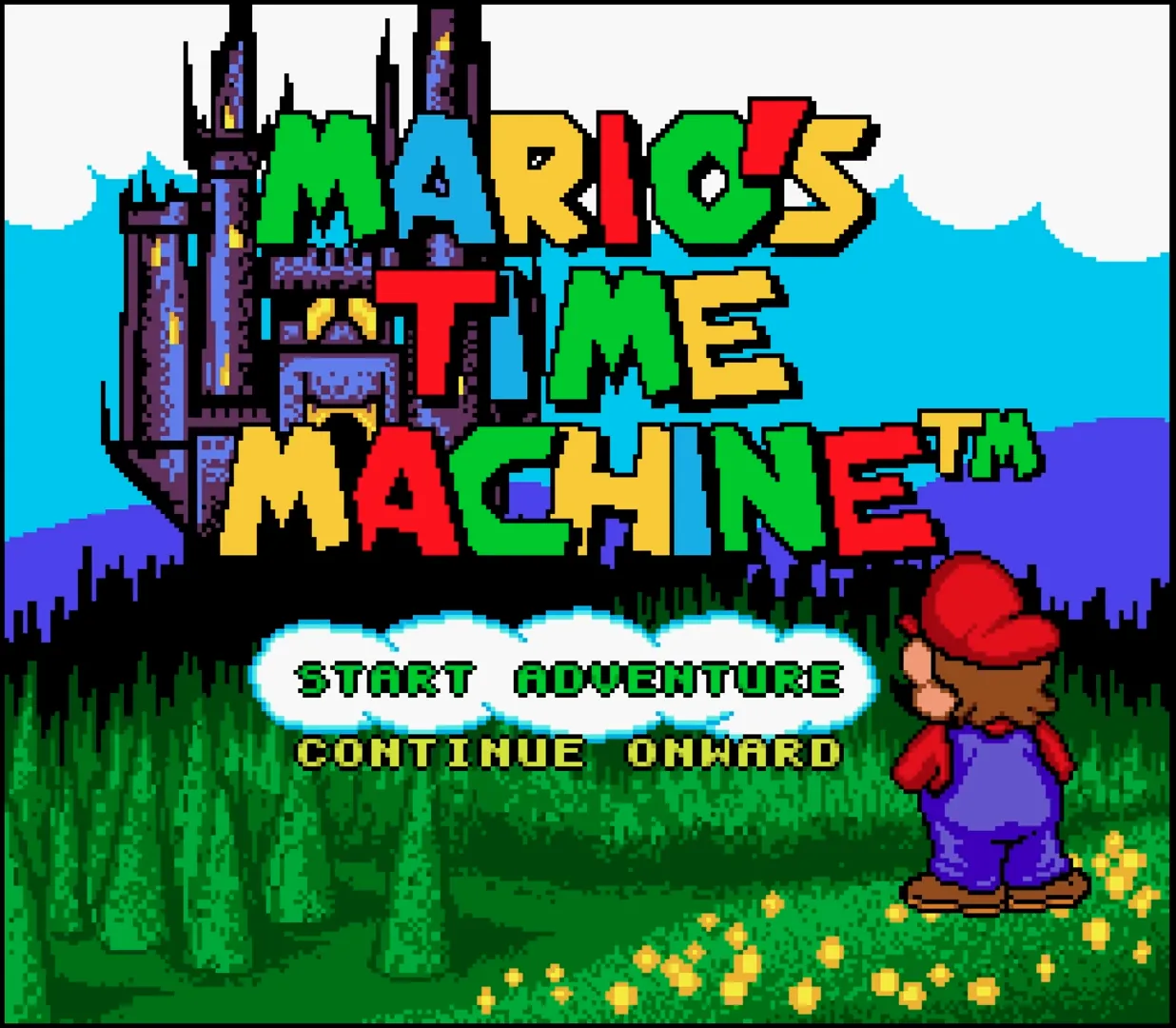
In the 1980s, things began to change. With the introduction of passwords, it became possible to save player progress, such as what level you were on. This was later expanded to include things like health, inventory, and lives. More variables meant more complex passwords, which were often cumbersome to write down and input. Eventually, save batteries became a thing. With these, it became easy for players to save all their progress and come back to where they left off. Gone was the necessity of finishing a game in a single session. Developers were freed to make longer games, and even introduce stories.

Screenshot taken from NintendoComplete's Youtube Video .
Despite these advances, the legacy of arcade machines cast a long shadow over game design. Limited lives, continues, and timers remained core parts of what makes a game. Change did happen, although slowly. Today, many games have gone to the other extreme and are too easy. Instead of requiring skill to progress, they often have us grinding and save-scumming our way to victory.
How to Beat Difficult Games
So, how should you go about beating a difficult retro game? I have found the best strategy is to leverage neuroplasticity. I play until I'm tired, bored, or get a game over (whichever comes first). I leave the game alone at least until a new day, and often find that the part which was giving me so much trouble has become much easier. I rinse and repeat this process, and enjoy these challenging games much more for it.
About This Article
Syndication
This article is available for syndication. See our Article Syndication Policy.