published on .
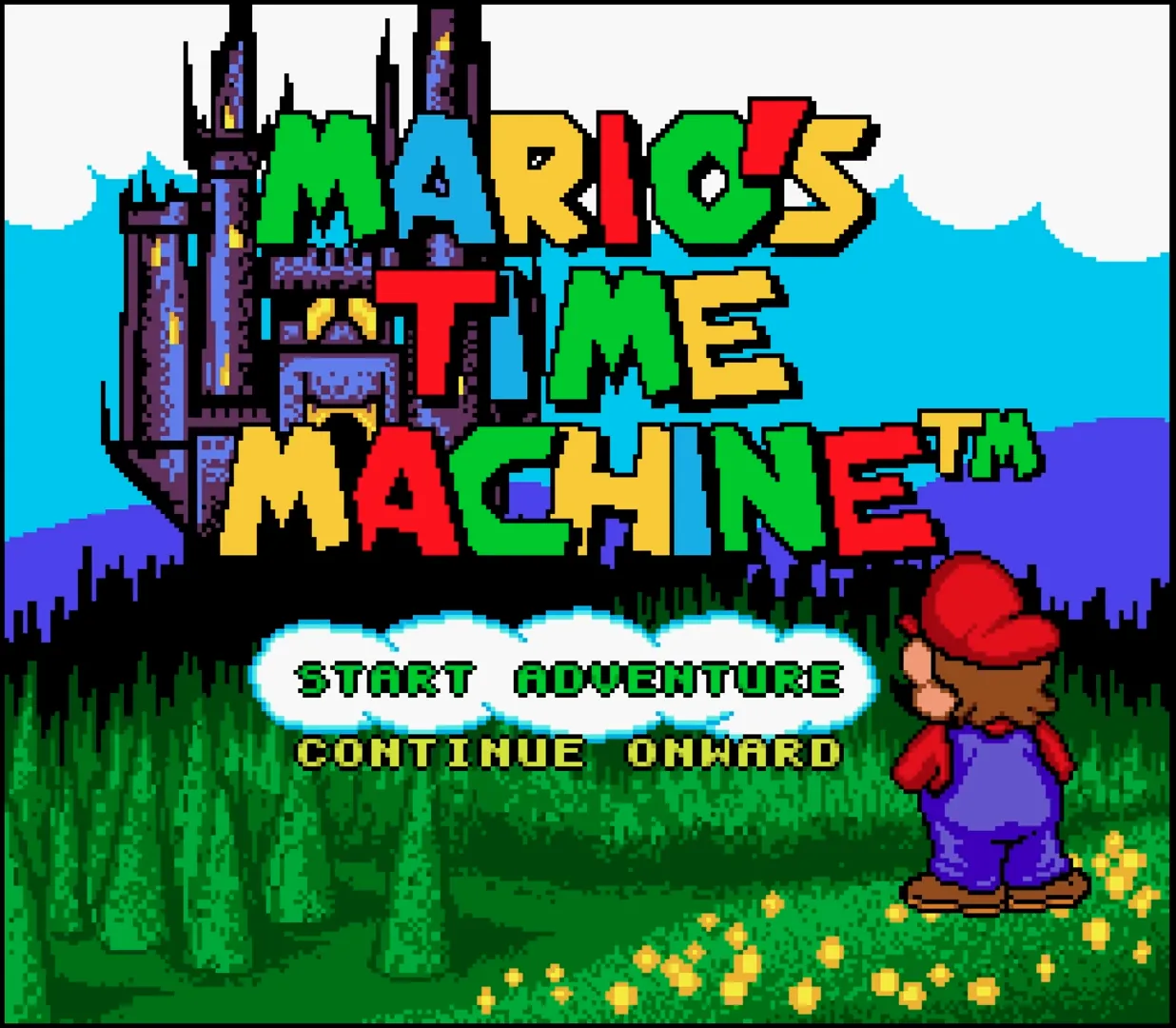
In the 1990s Nintendo granted several licenses to The Software Toolworks company to develop educational games. Mario's Time Machine is one of the stranger ones. The NES and SNES versions are radically different games sharing the same name. There's also a version of Mario's Time Machine for MS-DOS, which is similar to the SNES one but with different graphics.
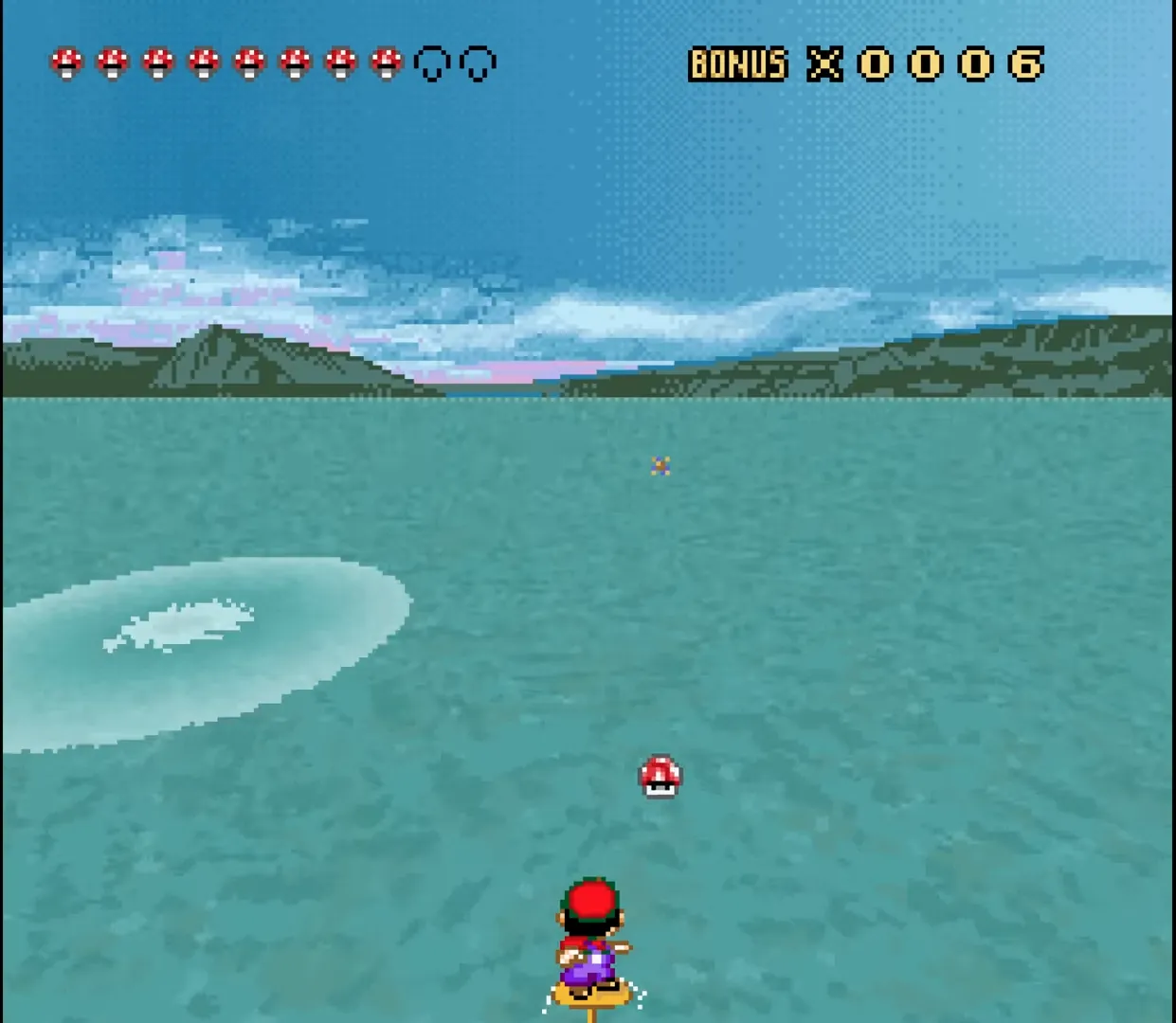
The SNES version would play the same if Mario was replaced with a cursor. Sure, he jumps, but there's nothing for him to jump on — no platforming or enemies. The only action in this game is when Mario travels back in time on his surfboard. He needs to collect 10 mushrooms to fill his meter while avoiding urchins, then plunge into a whirlpool to descend into the past.
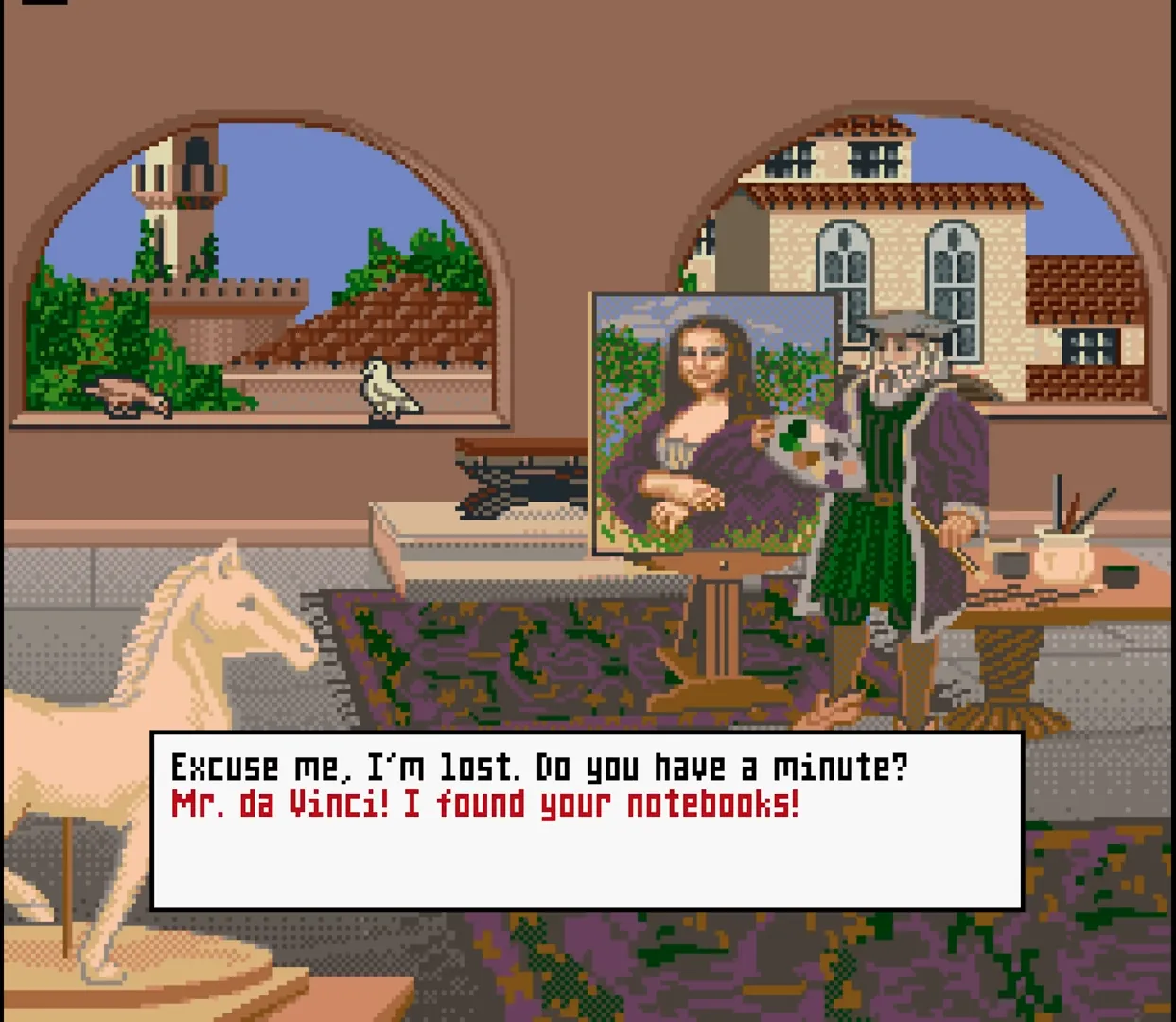
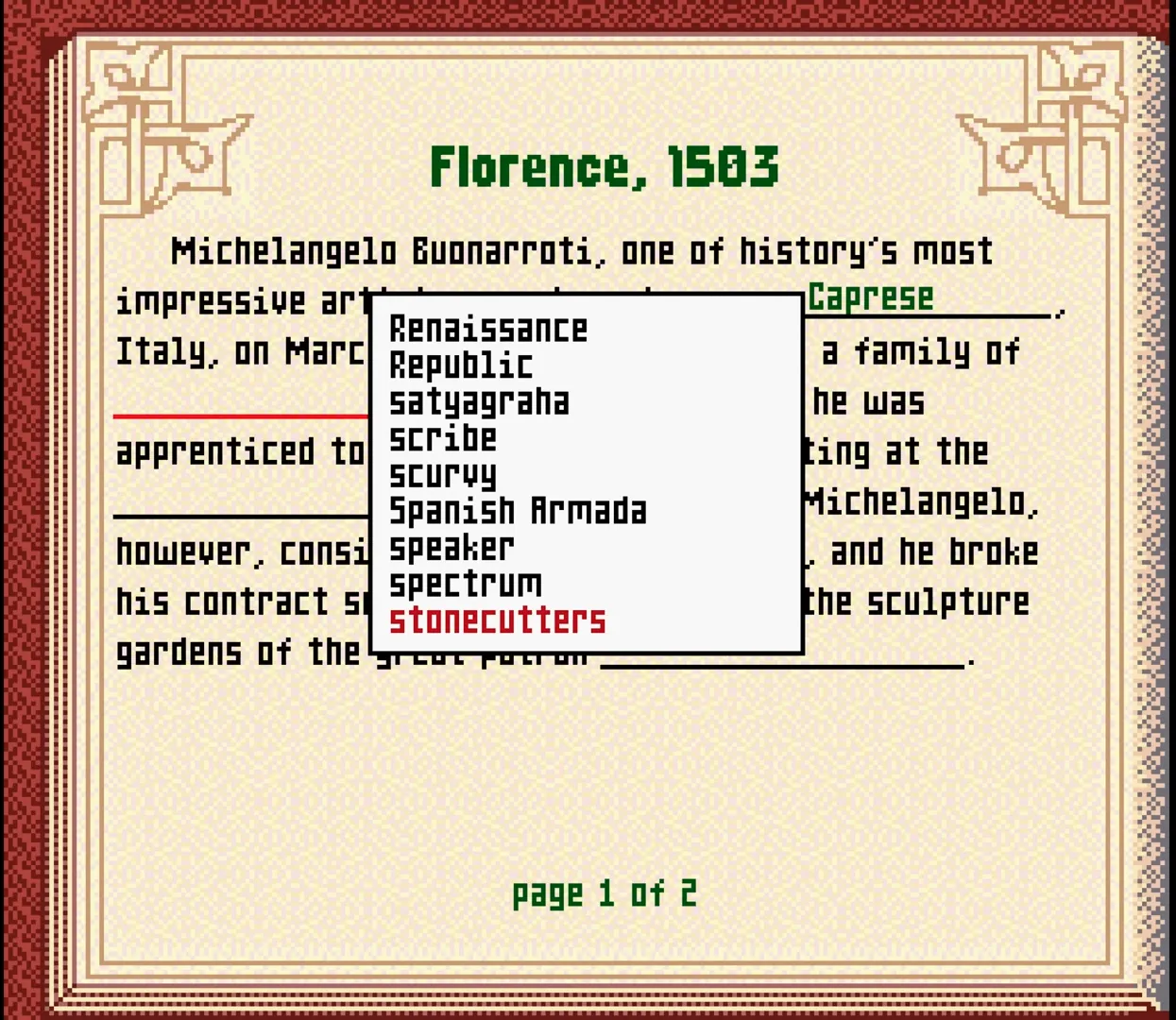
Once back in time, gameplay is always the same. Walk around left and right, talk to people, and move items between them (pressing Select changes items) to unlock more dialogue. Some people are difficult to find, and you'll have to spam the X button while walking around. Your goal is to acquire enough information to fill out the blanks in a 2-page document, then return the stolen artifact to a historical figure. Then you return to Bowser's Castle to repeat the whole process at a different time and place, for a total of 15 times.
The game has 3 endings, and to get the best one you need to return the artifacts quickly and in chronological order. To do the former, you gotta answer the quiz in Bowser's Castle and go straight to the great men and women of history and give them the artifacts. No time for sightseeing, talking to other people, or helping them with fetch-it quests. Of course you really gotta play the game at least once to have the knowledge required to fill in the documents. You also need to start with the earliest artifact in each of the 3 rooms, and work your way toward the most recent one (read the dates on the document). I recently replayed the game and got the bad ending, despite getting a score of over 10,000 points, so you really gotta be fast. My advice is to ignore the timer on your first play-through and focus on having fun and learning, both of which the timer punishes.
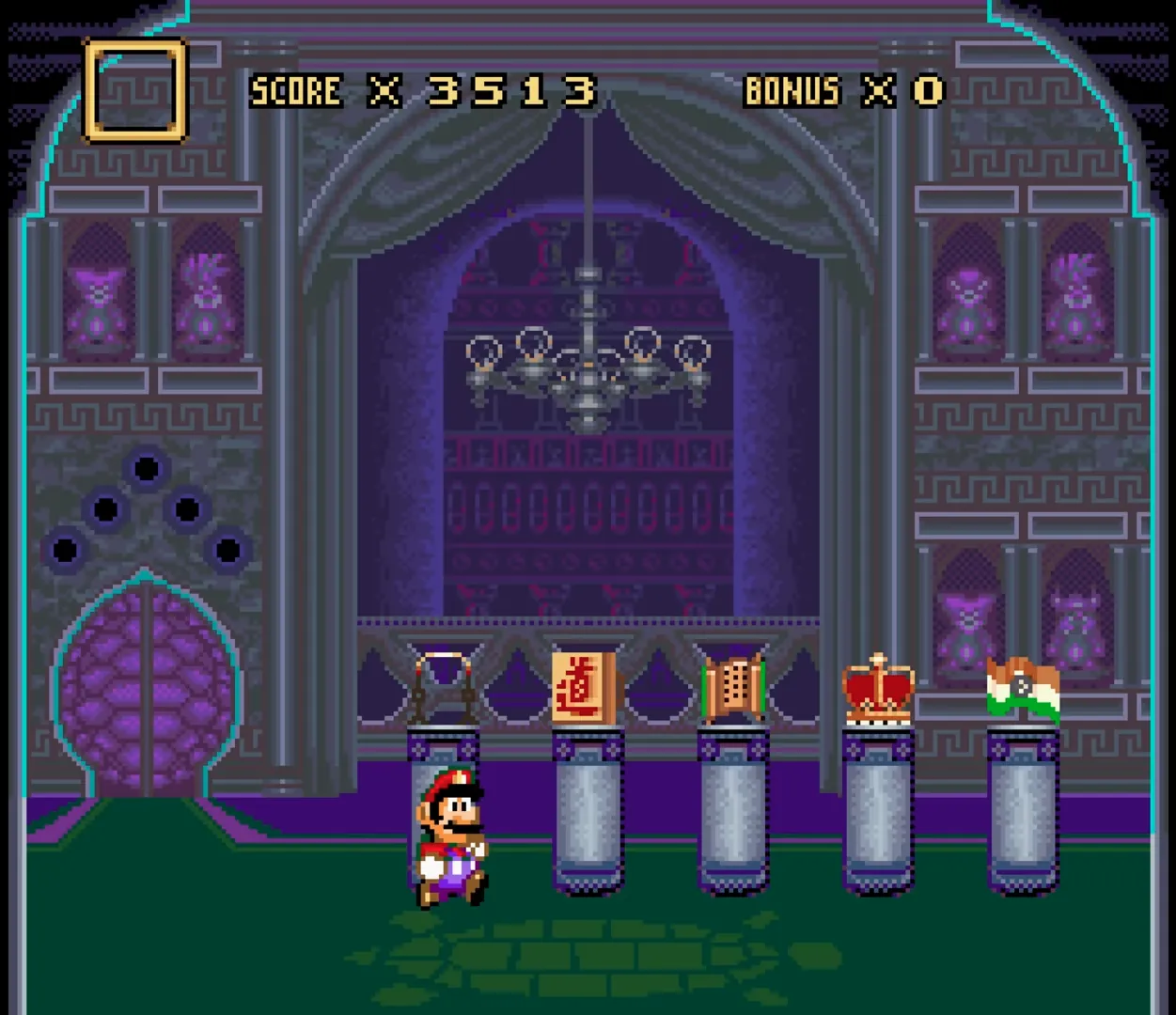
As much as I wanted to call this game shovelware, it kind of grew on me. While not really a Mario game in the traditional sense, it did an okay job of teaching history, which was its intended purpose. Sure, there's only 15 levels, and it feels a little shallow, but what glimpses we do get of the past are memorable. In fact, I was able to complete most of the documents while in Bowser's Castle this run, which I think proves that it did a good job of making these facts stick with me from playing it years ago. This said, most of the drop-down answer options are obviously wrong, so you can try to brute force it. Get 3 wrong answers in a row, though, and the document resets to being all blanks.
The music is actually rather good — often warm and enjoyable, but it gets rather repetitive. Mario is too small relative to everything else (the huge seagull on Magellan's ship is hilarious). What little animations there are feel stiff, but add a little charm.
Overall I would say that Mario's Time Machine for the Super Nintendo is a historical artifact in its own right, but you'll probably get the same value watching a long play video as playing it yourself.
About This Article
Sources
- Screenshots in this article were captured from XRavenXP's Mario's Time Machine longplay on Youtube.
Syndication
This article is available for syndication. See our Article Syndication Policy.