published on .
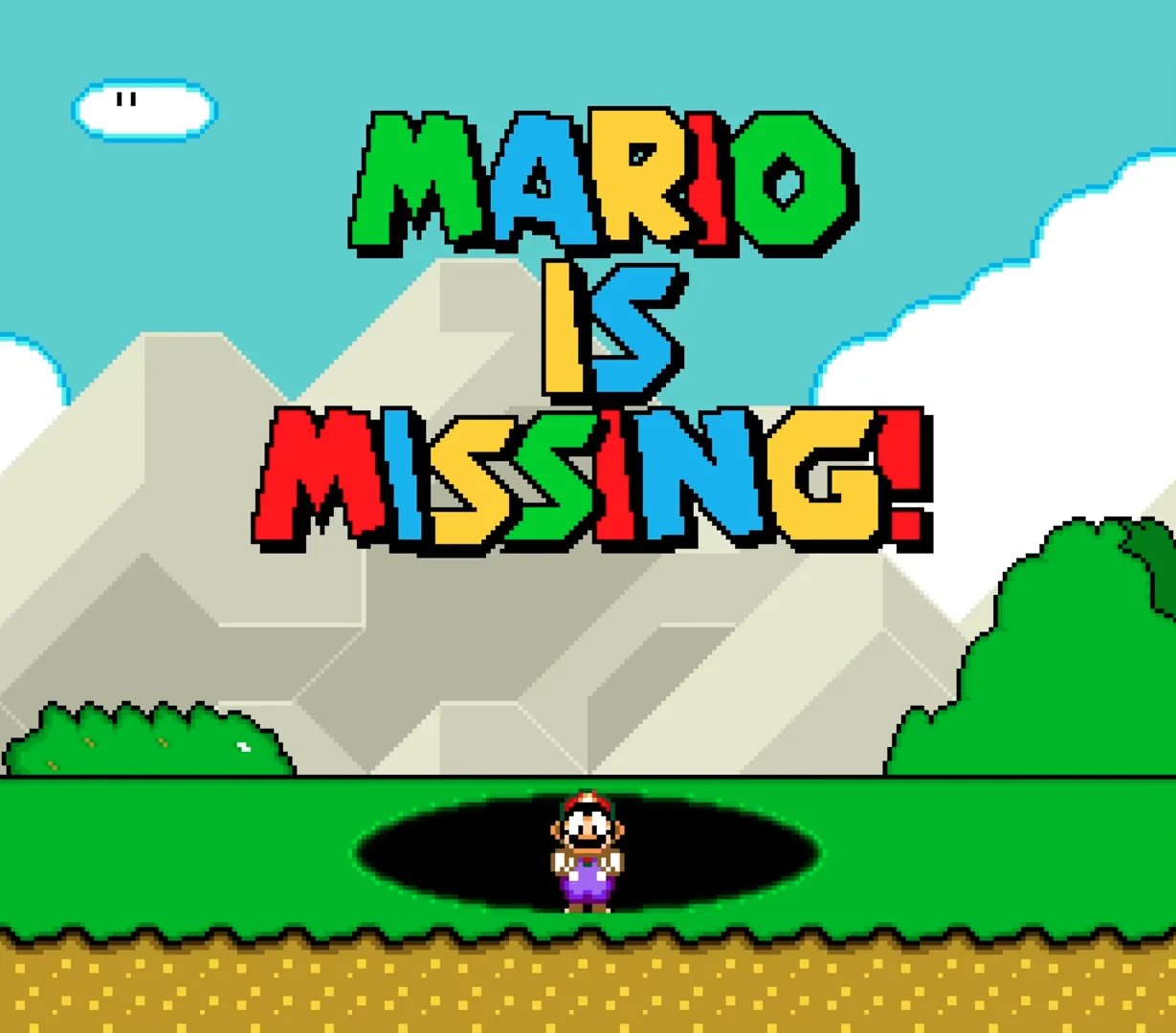
In 1993, The Software Toolworks company released two historical educational games — Mario's Time Machine and Mario Is Missing. The latter is arguably a better game, but a worse teacher.
For the first time, Luigi got his own game. We play as him while searching for his brother Mario, who went missing in Bowser's Antarctica Castle.
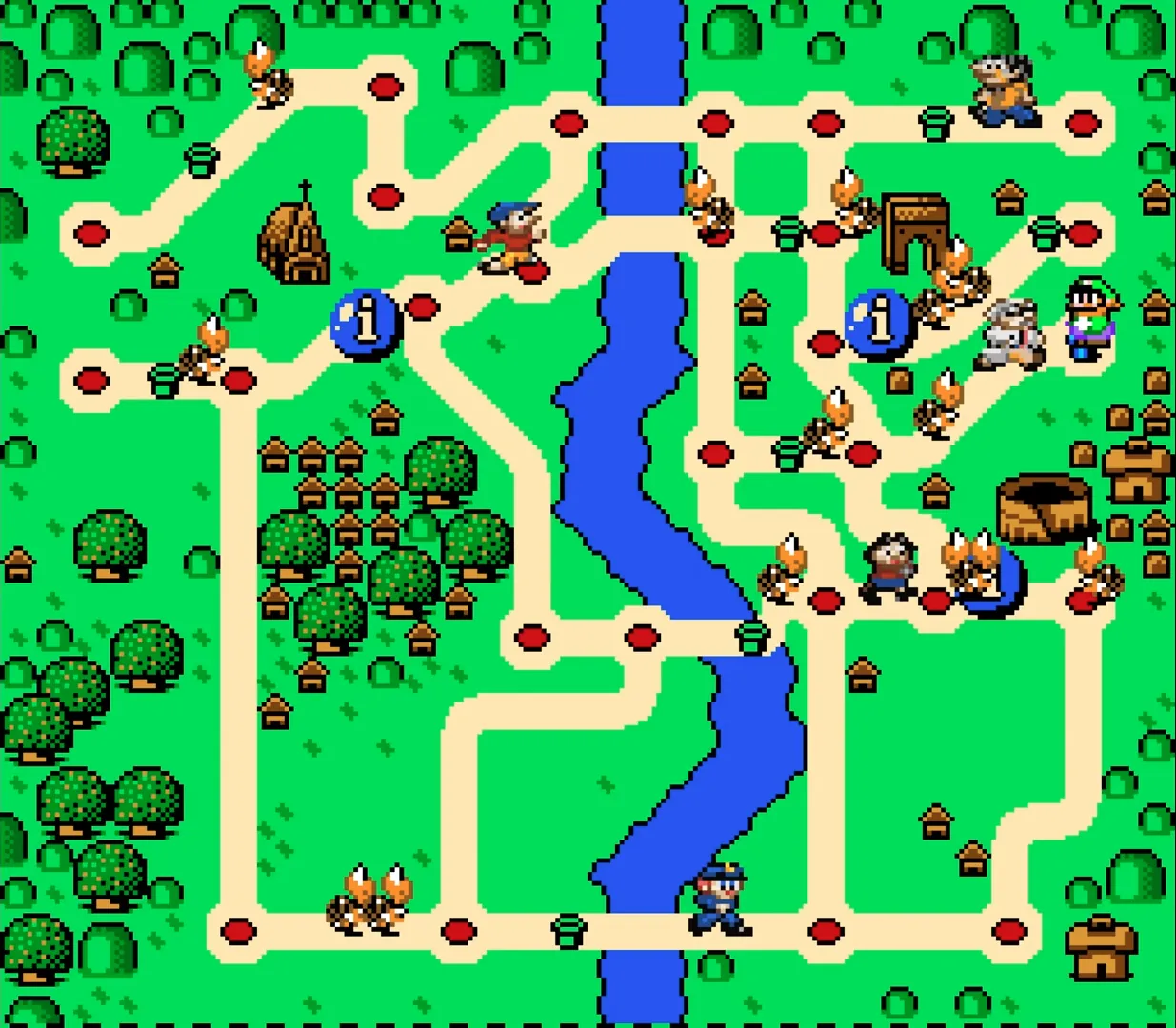
In order to find Mario, we must visit 15 cities and stomp on Koopas to retrieve 3 artifacts they have stolen from each city. Hilariously, these include things such as the roof to the Sistine Chapel (how a little Koopa Troopa managed to store that in a pouch I'll never know). Once you get the artifacts, you're supposed to return them to the Information Booths manned by Princess Peach. This is even funnier since she seems to be in 45 places at once. Either she's got a teleportation spell we never see in other games, or she made a bunch of copies of herself. Kind of makes you wonder if she ever needs to be rescued from Bowser if she has such an ability. This seems very strange when one considers that the computer versions had lots of different curators, so perhaps the developers were facing time or budget constraints for the SNES version and decided to slap Peach in there.
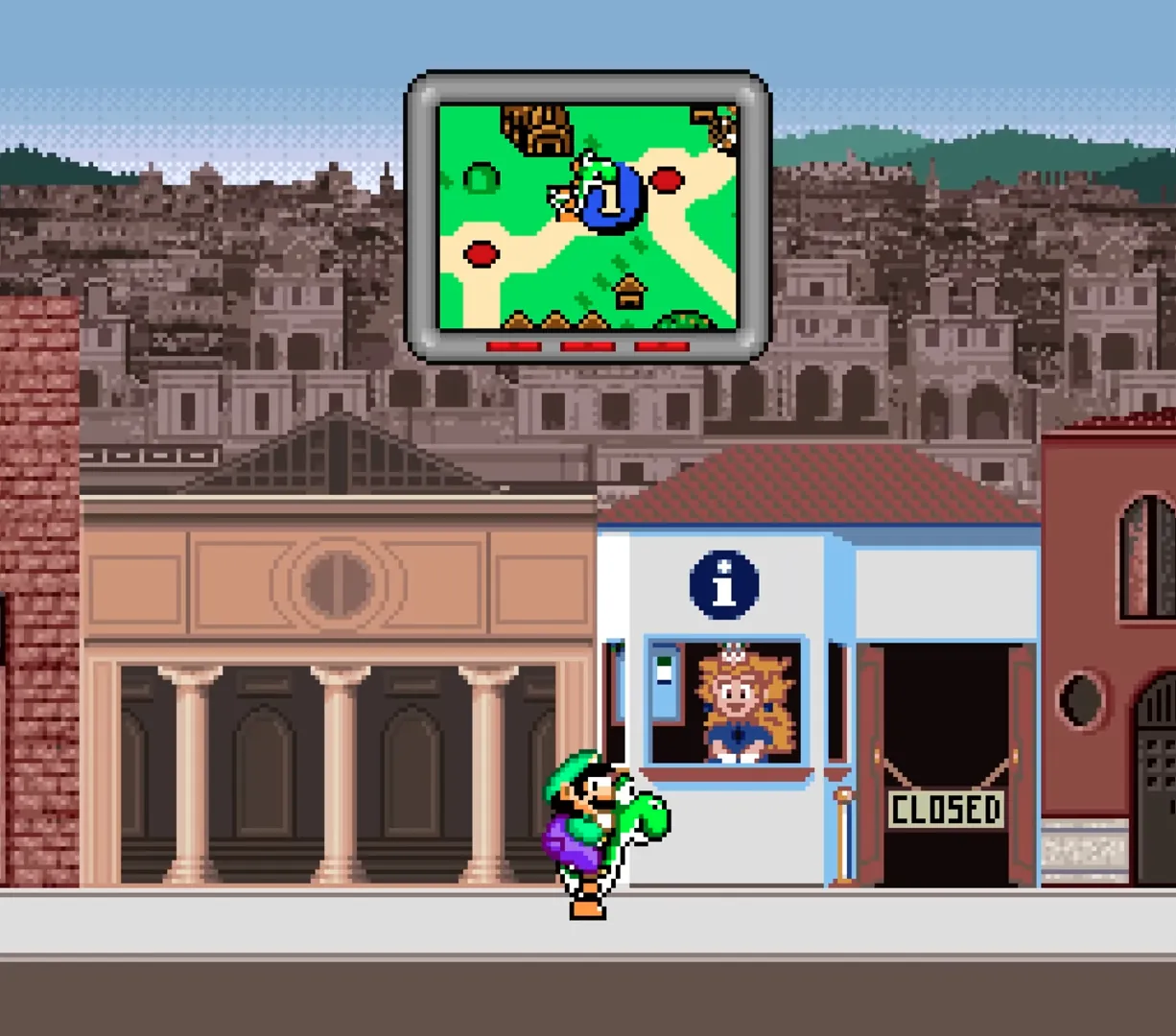
Speaking of NPCs, the game has the same people walking around each of the 15 cities. It's rather funny seeing all these European-looking characters popping up in Asia, Africa, and South America — including the same red-headed police woman. It's almost as if the entire world's human population consists of under 10 individuals — several of whom are cursed to walk up and down the same streets for eternity.
To get the most "information" this game professes to offer, you gotta hunt down the wandering NPCs with your 3 artifacts and ask them about each one, as well as the city you're currently visiting. This task is made much faster if you use the Globulator to call up Yoshi, who will cheerfully carry Luigi around. Unfortunately, the in-game computer's text is a dark gray on a black background, so you had better pay attention to what the NPCs tell you, as it's difficult to look up later.
There is the appearance of combat in this game, but with none of the dangers. Nothing can hurt Luigi — even Bowser's dorky kids run around impotently while trying not to get stomped on. Which is funny, because they stand menacingly on the other side of the gate, and rush in like they mean business once Luigi has cleared 5 cities. As for Bowser, he makes an appearance at the end, but it's just a cutscene.
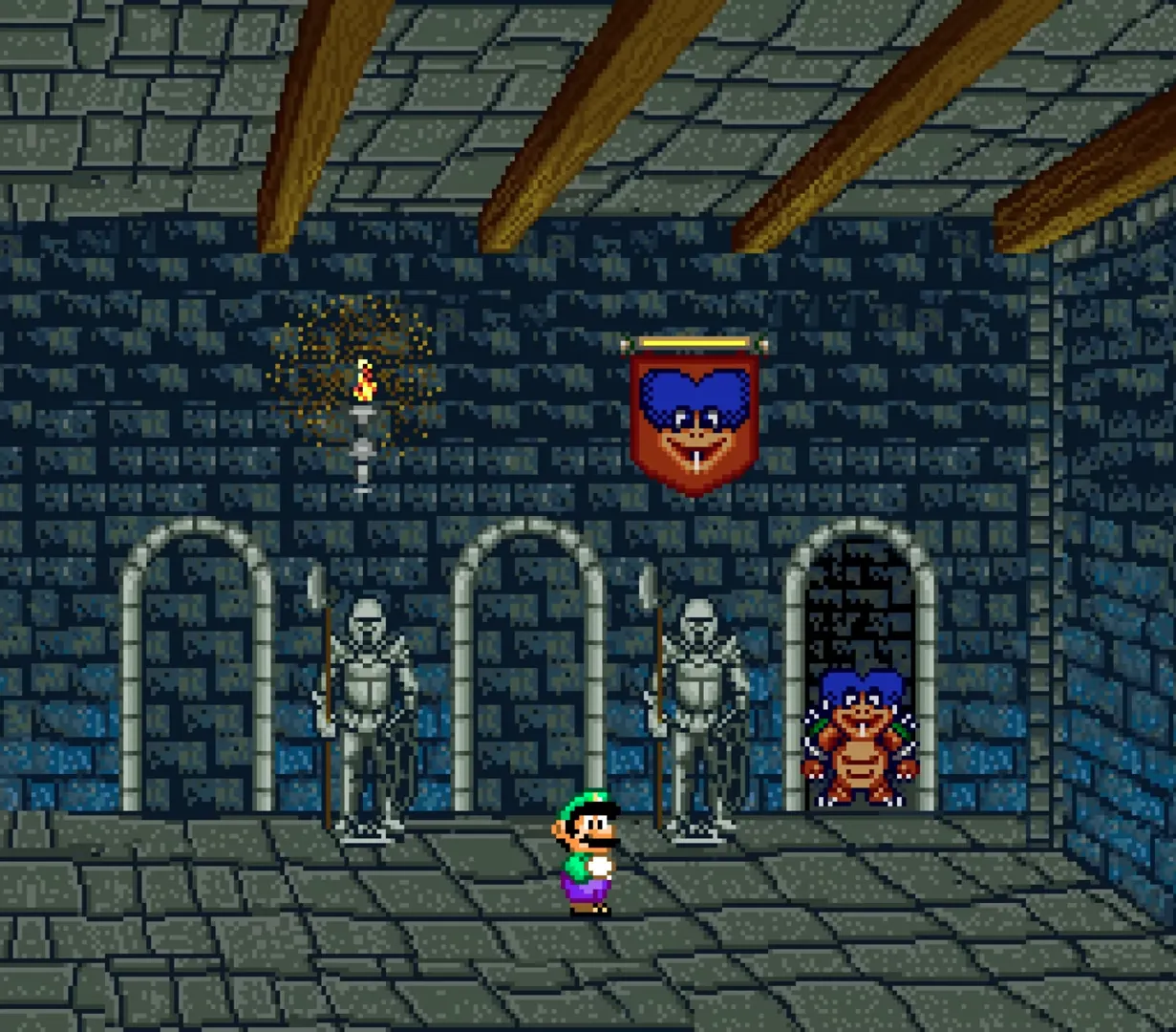
And while the 15 cities have their own graphics, and there's some variation in the soundtrack per location, they honestly start to feel the same after the first few levels. It's the same basic gameplay loop— hunt down Koopa Troopas, bring up the map every 30 seconds to figure out where the hell you are, talk to the same NPCs, and try to pass Peach's little test, or she'll call you a fraud. I found myself grateful that the game has a short (7 character) password after clearing each city. I'm going to recommend that if you play this, focus on Luigi and the foreground — I spent too much time looking at the parallax effect on the background and got a little woozy.
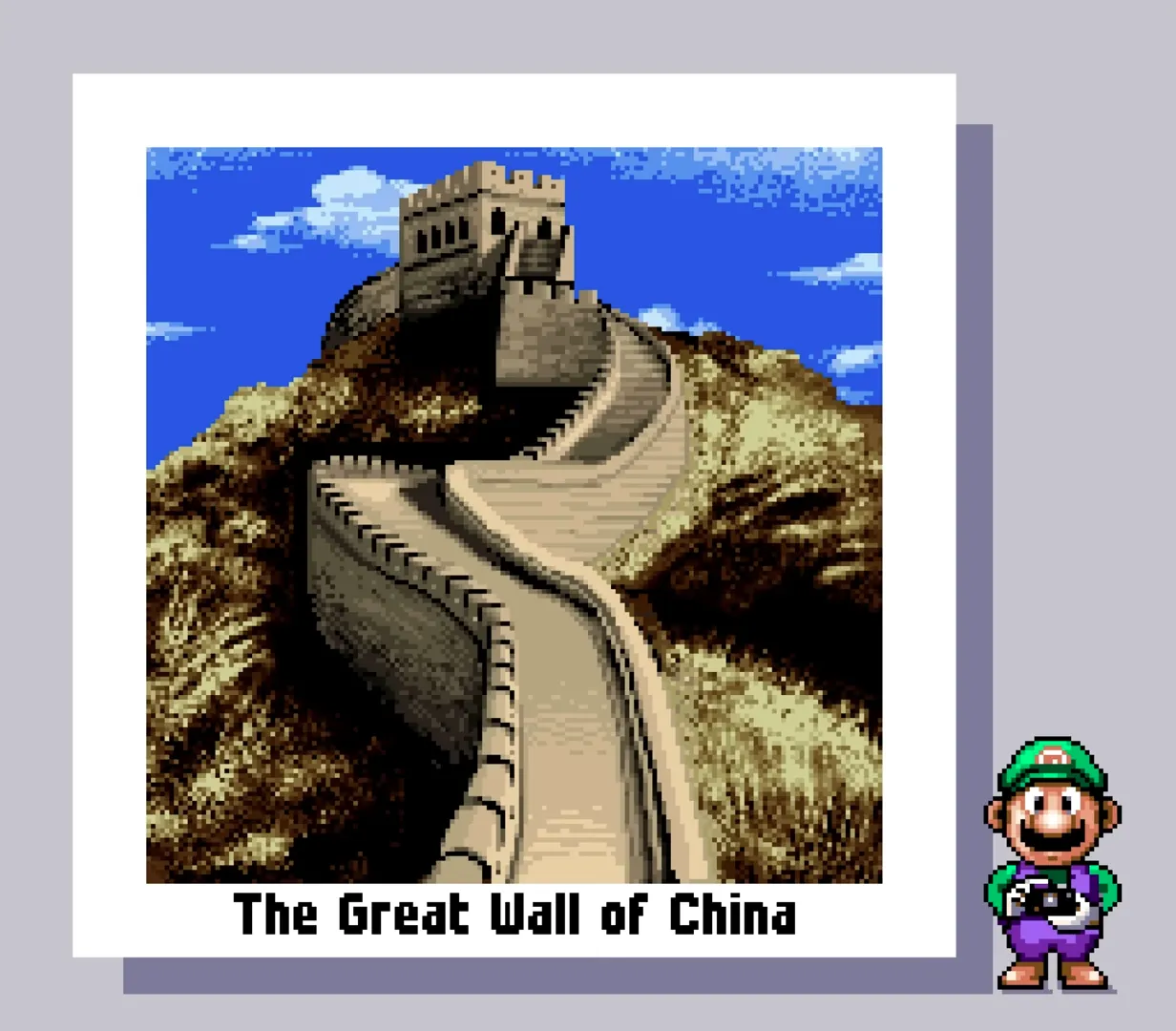
When you do pass Peach's test, you get rewarded with a chance to go and see the historical site. If you can get Luigi through the door (which has an absurdly small hit box), he'll take a picture of it, which you'll see him proudly standing beside it with his camera. Turns out Luigi is quite the shutterbug, and seems to be enjoying himself like this is some kind of vacation from Mario...
Sadly, many of the "facts" in this game are outright wrong. For example, it states that the Great Wall of China took a mere ten years to build, the Bolshoi Theater being built in 1856 (despite opening in 1825), and confused Ivan the Great's title with Ivan the Terrible's. These historical inaccuracies greatly diminish Mario Is Missing's value as a teaching game. Mario's Time Machine does a much better job at getting its facts straight, and its lessons stuck better with me.
I'll give this game a little praise for its music, though. The soundtrack isn't half bad, and many of the tracks seem to be variations on other Mario games, while others seem to be originals. The sound effects are basically ripped straight from Super Mario World.
While Mario Is Missing isn't a terrible game, I can't say it's a good one either. It may be worth one playthrough to satisfy curiosity, but I don't think it has much replay value.
About This Article
Sources
- Screenshots in this article were captured from xRavenXP's Mario Is Missing Longplay on Youtube.
Syndication
This article is available for syndication. See our Article Syndication Policy.